
How a Shared Family Organizer App Reduces Chores
This guide is for CleverNote Notes: notes, people and reminders. Explore the other blog
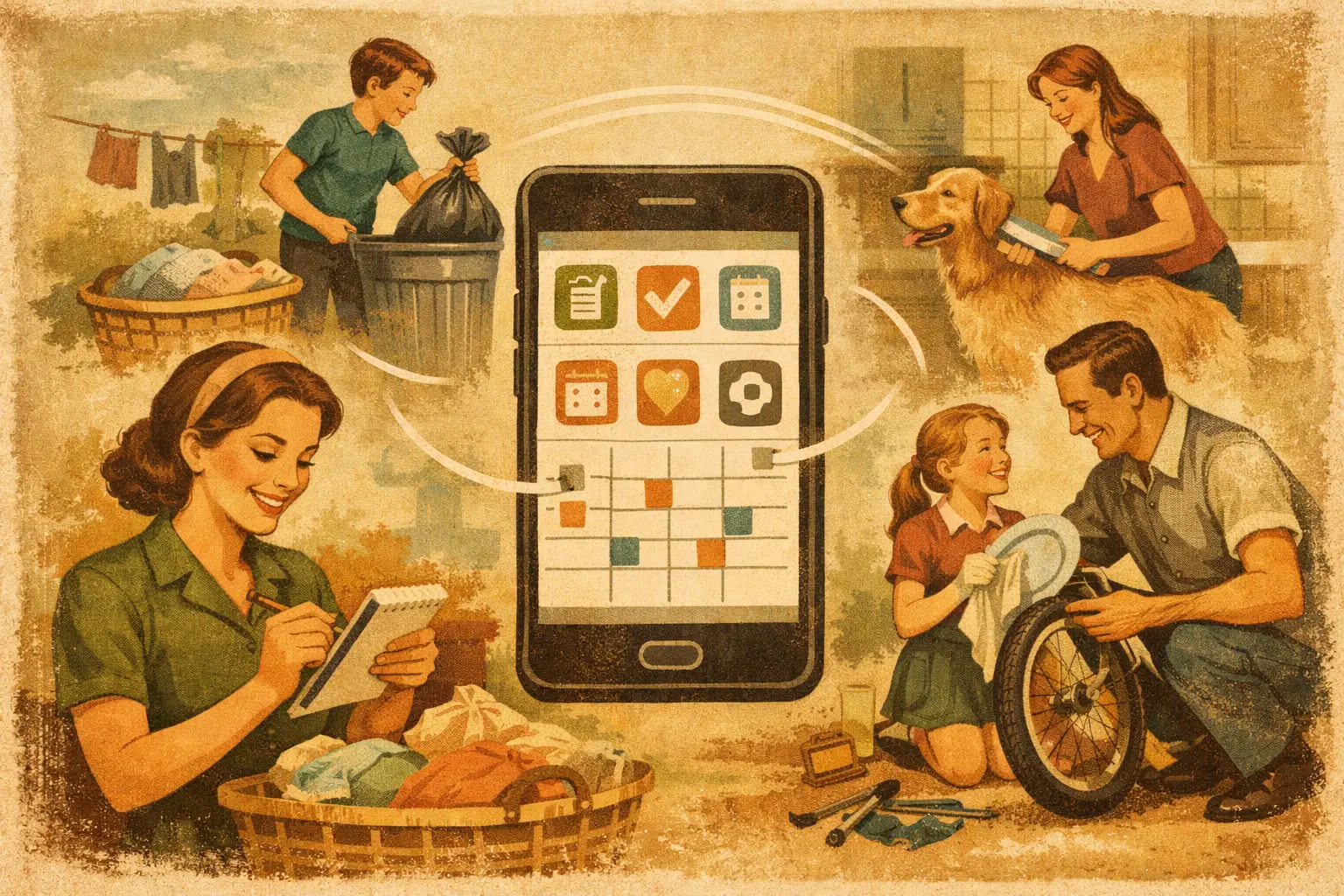
The school form is in someone’s email. The plumber’s number is buried in an old text thread. One person remembers the insurance renewal date, while another paid the bill and saved the receipt somewhere on their phone. A shared family organizer app is meant to stop this familiar scavenger hunt.
But a useful family organizer is not just another calendar with more people invited. Families already have calendars, group chats, photo libraries, email inboxes, banking apps, and notes that begin with “don’t forget.” The real problem is that household information lives everywhere, and nobody has time to file it perfectly before life moves on.
The best system gives everyone a reliable place to capture what happened, find what matters, and confirm the details without asking the same question twice.
What a family organizer should actually organize
A household runs on more than appointments. It runs on context: who paid for something, when a repair was done, which pediatrician a child saw, what the landlord said, and where the warranty went.
A calendar can tell you that a dentist appointment is next Tuesday. It usually cannot answer, “Which dentist did we use last time?” or “Did we pay the outstanding balance?” A task list can remind someone to buy cat food. It cannot show which brand worked, when it was last ordered, or the receipt if you need to return it.
That is why a family organizer works best when it handles several types of household memory together:
- schedules and recurring dates
- contacts for schools, doctors, sitters, contractors, and neighbors
- receipts, invoices, warranties, and insurance documents
- household expenses and payment confirmations
- notes, voice memos, photos, and decisions made along the way
The goal is not to turn home life into a project management system. It is to make everyday information recoverable when someone needs it.
A shared family organizer app needs more than a calendar
Sharing is valuable, but it introduces a trade-off. Put everything in one shared space and it can become noisy or expose information that should remain private. Split information across individual apps and messages, and the household loses its common reference point.
A practical setup separates what is truly shared from what is personal. The family calendar, home documents, service contacts, school information, and recurring bills generally belong in the shared household record. Personal work notes, private health information, and individual spending may need different access rules.
Before choosing an app, decide what “shared” means for your household. For some couples, it means both people can see upcoming commitments and major bills. For a family with teenagers, it may mean shared schedules and house rules but not financial records. For adult siblings managing a parent’s care, it may mean a shared log of appointments, medications, documents, and expenses.
The right tool should support your actual arrangement instead of forcing everyone into the same level of visibility.
Start with the moments that create friction
Do not begin by moving every old document or rebuilding your entire calendar. That is how an organizing project becomes another abandoned chore.
Start with the recurring moments that cause questions, duplicate work, or missed details. Maybe it is home maintenance. Maybe it is school logistics. Maybe it is keeping track of who paid which bill.
For example, after a handyman visits, capture the invoice, take a photo of the completed repair, and save the contractor’s contact information. Add a short note such as, “Replaced kitchen sink valve, April 12. Warranty is one year.” Later, anyone involved can ask what was repaired, what it cost, and who did the work.
For family health logistics, save the appointment summary or upload a photo of the paperwork. Record the next step in plain language: “Follow-up bloodwork in six months.” The useful record is not a perfectly formatted folder. It is a detail that can be found at the right moment.
This is the rule worth keeping: capture first. Organize later, if needed. Better yet, use a system that can organize the useful parts automatically.
Capture information in the format it arrives
Household details rarely arrive as clean data. They come as a screenshot from a text message, a paper receipt on the counter, a PDF in an email, or a quick voice note made while driving home.
An organizer that only works when someone types fields into a form will lose to real life. The easier it is to capture a photo, document, link, audio note, or forwarded email, the more likely the household record stays current.
The next requirement is extraction. A receipt should become more than an image. It should be connected to a date, amount, merchant, and category when possible. A contractor invoice should be tied to the person, the work completed, and the source document. A school email should be searchable by the child’s name, event, and deadline.
That is where an intelligent memory tool can reduce manual work. CleverNote Notes, for example, is designed to read captured material, connect people, dates, values, and events, and preserve the original source behind the record. You should not have to create a folder called “Home Repairs 2026” just to remember who fixed the dishwasher.
Ask questions, not just search keywords
Traditional organization relies on remembering where you put something. You have to know whether the information was a note, an attachment, a photo, or a message before you can begin looking.
A better family system lets you ask the question the way it appears in daily life:
“How much did we pay for the roof inspection?”
“What was the name of the babysitter recommended by Jamie?”
“When does the car registration expire?”
“Did we already send the camp deposit?”
These questions combine different kinds of information. The answer may require a payment confirmation, a contact, a date, and a document. If the app can retrieve that context and point back to the underlying receipt, email, or note, family members can verify the answer instead of trusting a vague memory.
This matters most when responsibilities shift. One partner travels. A parent is sick. A sibling takes over a task. The person stepping in should not need a guided tour through someone else’s inbox to find basic household facts.
Build a shared routine that takes less than a minute
A family organizer only works if it fits into normal behavior. The routine should be small enough to survive a busy week.
Use a simple three-part flow: capture, ask, correct.
Capture the bill when it arrives. Capture the receipt after the purchase. Capture the voice note when a contractor explains what needs to happen next. Do not wait until Sunday night to sort it all out.
Ask when a question comes up. Search for the warranty, check the last payment, or confirm the address before leaving the house. The app should be useful at the exact moment you need an answer, not only during an organizing session.
Correct when the system gets something wrong or when circumstances change. A merchant may be categorized incorrectly. A contact may have a new phone number. A bill may be split between household and personal spending. Natural-language corrections are much easier to maintain than an elaborate tagging rule nobody remembers.
Use Finance for shared financial records
In the CleverNote family, use Notes for documents, people and reminders, and Finance for transactions and budgets. Sharing depends on your space and its access settings. Choosing a product does not automatically invite relatives or provide unlimited family members, per-document permissions or an external calendar integration.
Money is one of the most useful and sensitive parts of family organization. A shared view of recurring household costs can prevent missed payments and duplicate purchases. It can also create tension if the setup feels like surveillance.
Focus first on the expenses the household already treats as shared: utilities, insurance, rent or mortgage, groceries, child care, repairs, subscriptions, and major purchases. Save bills and proof of payment with enough context to answer practical questions later.
If you use bank-connected features, understand the access model. Read-only connections can import transaction data without allowing payments or transfers, and a trustworthy product should never require you to share your bank password directly. Still, not every family needs every account connected. Manual capture may be the better choice for private accounts or occasional expenses.
The point is clarity, not policing. A good record helps answer “Was this paid?” and “What did this cost last year?” without turning every purchase into a debate.
The test: can someone else take over?
A family organizer earns its place when another person can handle a task without starting from zero. They can find the repair history, call the right person, confirm the due date, and see the supporting document.
That is the difference between storing information and creating a household memory. Storage asks you to remember the location. Memory gives you the context when the question appears.
Start with one area that causes repeat confusion this week. Capture the next receipt, save the next service document, or record the next decision. Small records become a calmer household when they are easy to find and easy to trust.
Try the app from this guide with your CleverNote account.
Open CleverNote Notes