A Guide to Organizing Tax Records Without Folders
This guide is for CleverNote Finance: transactions, budgets and goals. Explore the other blog
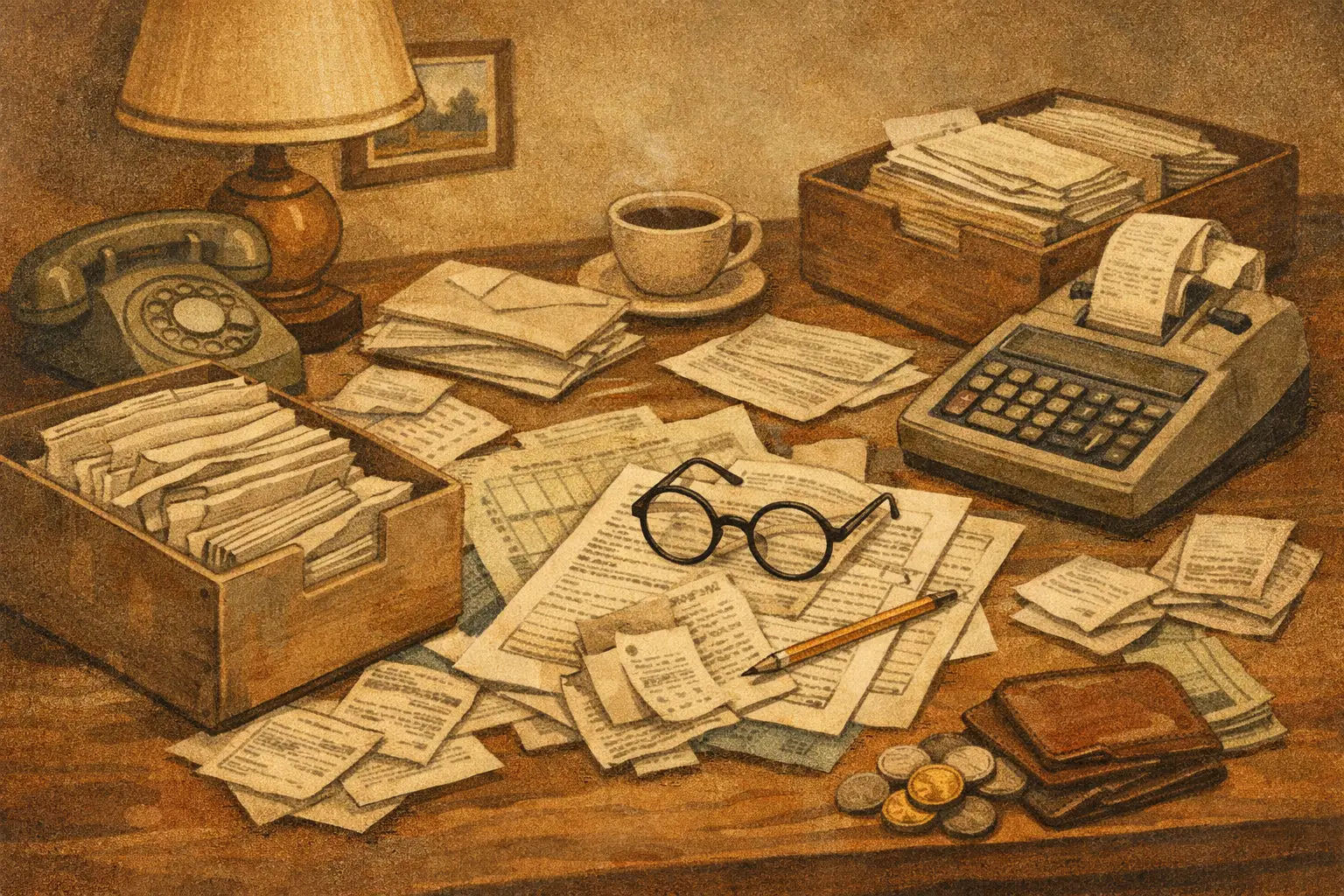
A missing receipt is rarely just a missing receipt. It is the $640 equipment purchase you need to substantiate, the mileage note buried in a calendar, or the donation confirmation sitting in an old email. When tax time arrives, the real cost is not only money. It is the time spent searching across your camera roll, inbox, bank app, desktop, and kitchen drawer.
This guide to organizing tax records is built for a simpler reality: you should be able to capture proof when it appears, then retrieve it when you need it. No color-coded binder. No Sunday afternoon spreadsheet ritual. Just a reliable record of what happened, when, with whom, and how much it cost.
Start with the questions you will actually ask
Most tax organization systems fail because they begin with folders. “2026 Taxes,” then subfolders for “Receipts,” “Income,” and “Expenses.” It looks sensible until a document fits more than one category. Is a contractor invoice an expense, a home-office record, or proof of a payment to a specific person? Then the system relies on you remembering where you put it.
Start with retrieval instead. Think about the questions that come up in March, during an audit, or when your tax preparer asks for backup:
- How much did I spend on business software last year?
- Where is the invoice for the laptop I bought in September?
- Which payments did a client make, and which invoices are still open?
- Can I prove this charitable contribution?
- What did I pay my contractor in 2025?
These questions reveal the fields that matter: date, amount, merchant or person, purpose, payment source, and the original document. Your records do not need to live in a perfect hierarchy. They need to answer a specific question with evidence.
Capture records at the moment they exist
The easiest receipt to organize is the one you save before it disappears under 2,000 photos. Capture it while you are standing at the checkout counter, when the invoice lands in your inbox, or immediately after you pay a contractor.
For paper receipts, take a clear photo that includes the vendor, date, line items, total, and payment details if available. Avoid folded, shadowy photos where the total is cut off. If the receipt is fading thermal paper, photographing it quickly matters even more.
For digital proof, save the original PDF, email confirmation, or invoice rather than copying only the total into a note. A bank transaction can confirm that money left your account, but it may not show what was purchased or whether it was a business expense. The original receipt supplies that missing context.
A practical capture habit has three parts: save the source, add a brief explanation if the purpose is not obvious, and keep related evidence together. For example, a restaurant receipt labeled “Lunch with Jordan, prospective client” is much more useful than “Restaurant - $86.42.” The amount alone will not help you reconstruct the business purpose eight months later.
Separate tax records from everyday financial noise
Not every purchase needs a tax file. Saving every grocery receipt, coffee purchase, and streaming charge creates a pile you will not review. The goal is not to document your entire life. It is to preserve records that support income, deductions, credits, asset purchases, and payments you may need to explain.
For many individuals, that includes income documents, statements connected to investments or retirement accounts, deductible expense receipts, charitable giving confirmations, health-related documents when relevant, and records connected to property or major assets. If you are self-employed, add client invoices, payment confirmations, contractor payments, business travel details, business-use purchases, and mileage records.
The exact list depends on your situation. A salaried employee with a simple return needs a lighter system than a freelancer who has client income, home-office expenses, and quarterly estimated payments. A landlord, investor, or small business owner may need records that connect costs to a particular property, account, or asset over multiple years.
When you are unsure whether something is relevant, keep it with a short note. Deleting a document later is easier than rebuilding proof after the fact.
A guide to organizing tax records by evidence, not folders
A useful tax record has two layers. The first is the document itself: a receipt, invoice, statement, acknowledgment letter, or tax form. The second is the context that explains why it matters.
For each meaningful item, aim to preserve these details in plain language: what it was, who was involved, the date, the amount, and the tax-related purpose. “Adobe annual subscription, design work for Acme project, paid January 12” is enough context to make the record useful later. You do not need to invent a complicated tagging system.
This approach also handles documents that belong in multiple places. A receipt for a phone used partly for work can be connected to the merchant, the recurring service, the payment account, and your business expense records. One source, several ways to find it.
That is more durable than manually duplicating files across folders. Duplicates create their own problem: one copy gets renamed, another gets updated, and suddenly you are not sure which one is complete.
Keep income and expenses connected to the source
A clean bank feed is helpful, but it is not a complete tax archive. Transaction descriptions can be vague, and transfers, reimbursements, refunds, and split purchases can be misleading without supporting documents.
For income, retain the invoice or agreement, the payment record, and any relevant tax form. If a client pays several invoices in one transfer, note the relationship while it is fresh. Later, you may need to answer a simple question: “What did this $3,500 deposit cover?”
For expenses, connect the receipt to the payment instead of treating them as separate facts. A charge on your card plus a photo of a receipt plus a short business-purpose note creates a defensible record. If an expense is reimbursed, record that too. Otherwise, you may accidentally count a personal cost or duplicate a deduction.
Be especially careful with mixed-use expenses. Internet, phone, vehicle, home office, and travel can involve personal and business use. The right treatment depends on the facts and current tax rules, so do not force a personal percentage into a system just because a category requires one. Preserve the evidence, document your reasoning, and ask a qualified tax professional when the line is unclear.
Build a monthly review that takes minutes, not a weekend
Tax records become overwhelming when all review is postponed until filing season. A brief monthly check keeps the system honest without turning you into your own bookkeeper.
Once a month, review recent transactions and ask: Is there proof for unusual or deductible purchases? Did I receive income that needs an invoice or payment note? Are there documents still sitting in email or text messages? Did I pay an estimated tax amount, make a donation, or buy an asset that should be easy to find later?
Then correct anything that is wrong or incomplete. A receipt may have been read as the wrong amount. A transaction may be personal rather than business. A vendor name may need a human explanation. Corrections are not signs that your system failed. They are how it learns the facts of your life.
With CleverNote Finance, this can look less like filing and more like asking: “Show me the receipts for client travel this quarter” or “How much did I pay my accountant last year?” The useful part is not just a total. It is being able to inspect the original receipts, emails, and documents behind the answer.
Retain records for the right amount of time
Retention is where generic advice can become risky. How long you should keep a record depends on the document, your return, the type of income or deduction, and the possibility of an amended return or audit. Tax rules and state requirements can differ as well.
As a practical baseline, keep copies of filed tax returns and the documents supporting them for several years. Records related to real estate, investments, business assets, depreciation, and major improvements may need to stay with you much longer because they affect future gain, loss, or deduction calculations. Property purchase documents, closing statements, and improvement invoices are easy to underestimate until you sell.
Digital copies are often easier to retain and search than paper, provided they are readable, complete, and backed up. For records with legal or financial significance, preserve the original file where possible, not just a cropped screenshot. If you have a complex situation, your tax preparer can tell you which documents warrant a longer retention period.
Make proof easy to retrieve, even under pressure
The test of your system is not whether it looks organized on January 1. It is whether you can find a document in under a minute when a preparer asks, a client disputes an invoice, or you need to verify a number before filing.
Use natural descriptions that future you will understand. Capture the source. Keep the amount, date, person, and purpose connected. Review exceptions once a month. That is enough structure to make tax records useful without making organization another job. When the question arrives, you should be able to ask it plainly and see the proof behind the answer.
Try the app from this guide with your CleverNote account.
Open CleverNote Finance
CleverNote Finance