Automatic Reminders From Notes You’ll Trust
This guide is for the CleverNote: Notes & Reminders app. Explore the other blog
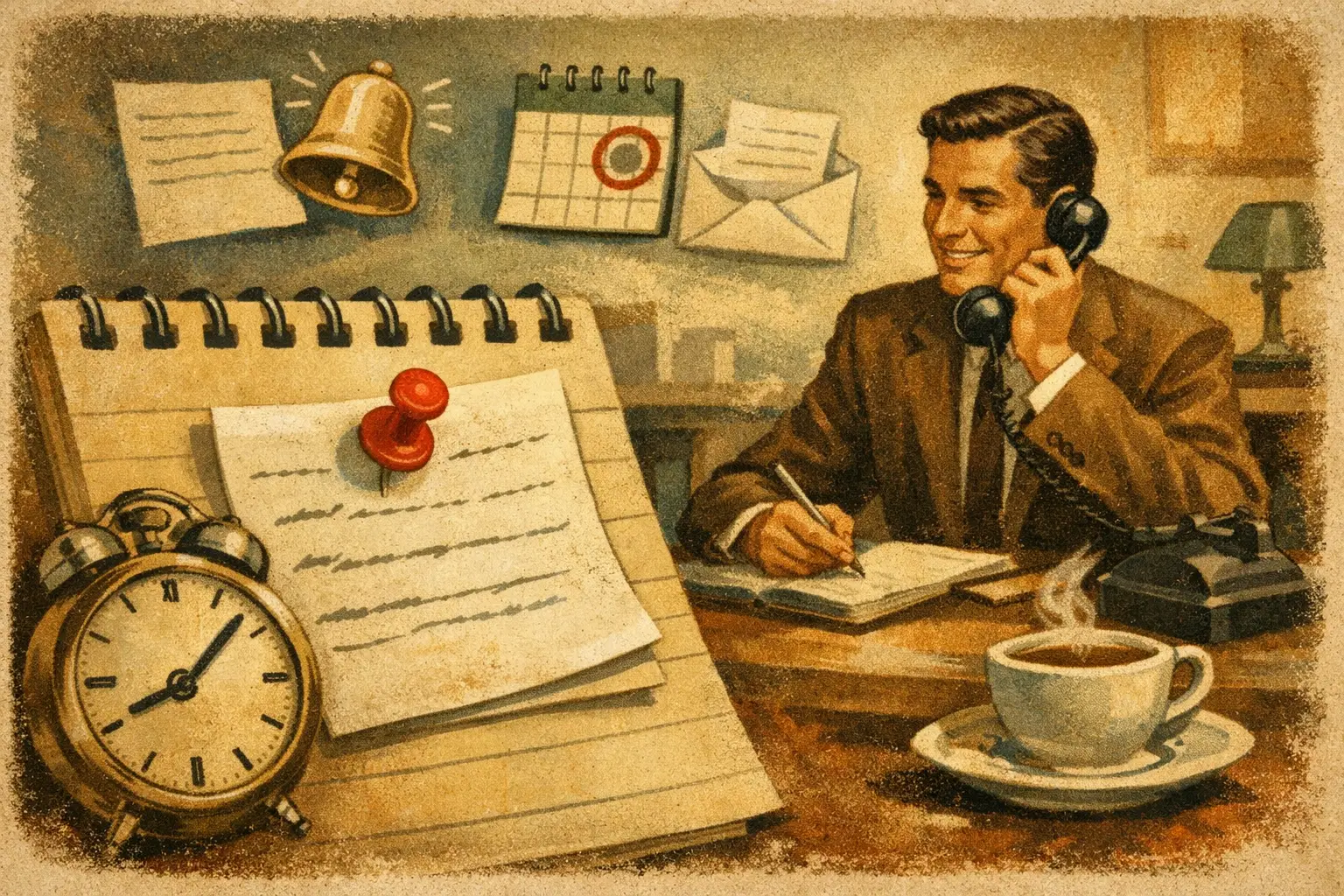
The plumber says the water heater warranty ends next month. You take a photo of the invoice, then get back to your day. Three weeks later, the deadline is gone because the detail was trapped in a camera roll. Automatic reminders from notes solve this very ordinary problem: they turn information you already capture into a prompt at the moment it becomes useful.
That is different from opening a task app and manually creating a reminder. Manual reminders work when you are already thinking in tasks. Life rarely arrives that neatly. It arrives as a receipt, a voice note after a call, an email confirmation, a photo of a contract, or a message that says, “Let’s revisit this in October.”
The useful system is not the one that asks you to organize every detail first. It is the one that recognizes a future-relevant detail, keeps the original source close by, and lets you correct it when it gets something wrong.
Why notes are full of future commitments
A note is rarely just a note. It often contains a date, a person, a promise, a renewal, a payment, or a decision that will matter later.
Consider the things that disappear into ordinary records: a dentist recommends a six-month follow-up; a client asks for a proposal after their budget meeting; a landlord sends a lease renewal date; a subscription receipt reveals an annual charge; your partner mentions that the dog needs another medication refill in 30 days. None of these starts as a formal task. But each can become one.
The problem is fragmentation. The dentist appointment may be in a calendar, the client conversation in a voice memo, the lease in a PDF, and the subscription receipt in email. Searching is possible if you remember what to search for. Remembering to search is the part that fails.
Automatic reminders change the sequence. Capture first. Let the system read the context. Review the suggestion if needed. Then receive the reminder with enough detail to act, rather than a mysterious alert that says only “Follow up.”
How automatic reminders from notes should work
A good reminder system starts with context, not a blank task field. It identifies the important parts of what you saved: dates, amounts, deadlines, recurring intervals, people, companies, and language that signals a commitment.
For example, you upload a receipt for a $480 appliance repair with a 90-day service guarantee. The reminder is not simply “Check appliance.” It can be tied to the repair, the technician, the purchase date, and the original receipt. When the notification appears, you know why it matters and where the evidence came from.
This source connection matters more than it sounds. A reminder without context creates another chore: figuring out what your past self meant. A reminder connected to the note answers the obvious questions immediately. What did I agree to? When did this happen? Who was involved? What was the amount? Where is the document?
Dates are not always deadlines
A date in a note is not automatically a date that deserves a notification. “I met Maria on May 12” is a record. “Maria asked me to send the estimate by May 12” is a commitment. Treating both the same creates noise.
That is why context is the real job. The system should distinguish an event that happened in the past from an action due in the future. It should also recognize uncertainty. “Maybe call the contractor next week” is different from “The contractor will arrive Tuesday at 9 a.m.”
Some reminders should be suggested, not silently created. A renewal date in a contract may deserve a prompt 30 days ahead. A casual idea in a late-night voice note may be better kept as a searchable note until you decide it is a real commitment. Automation should reduce decisions, not make decisions you never intended to make.
Recurring needs deserve different treatment
One-time deadlines are straightforward. Repeating life admin is where notes become especially valuable.
You may save an invoice that says a filter needs replacement every six months. You may record that a child’s medication refill is due monthly or that a business license renews annually. These details are easy to capture once and easy to forget later.
A useful reminder can use the original date as an anchor and repeat on the right schedule. But repetition needs judgment. A reminder to review a yearly insurance policy is helpful. A monthly alert for an old subscription you already canceled is not. The best systems make it easy to pause, edit, or remove a recurring reminder in plain language.
What makes a reminder trustworthy
More alerts do not create more control. They often do the opposite. Once notifications become vague, repetitive, or wrong, people mute them. Then the important ones disappear along with the clutter.
Trust comes from three practical qualities: clear timing, useful context, and user control.
Clear timing means the prompt arrives early enough to act. A passport renewal reminder on the expiration date is technically accurate and practically useless. The right lead time depends on the situation. A bill may need a few days. A contract renewal may need a month. A birthday gift idea may only need a nudge two weeks before the date.
Useful context means the reminder includes the reason. Instead of “Pay invoice,” it should show which invoice, for whom, how much, and the source record. Instead of “Follow up with Jordan,” it should point back to the call or message where Jordan requested the next step.
User control means you can say, “Remind me a week earlier,” “This is not a reminder,” or “Repeat this every year.” You should not need to hunt through settings, tags, or complicated rules. Natural corrections are faster because they match how people actually think.
Real-life reminders that save more than time
The value is not just remembering. It is avoiding the scramble that follows forgotten context.
A homeowner can save a contractor estimate and get a reminder before the quoted price expires. A freelancer can capture a client’s email request and receive a prompt before the promised follow-up date. A family can keep a school form, payment confirmation, and event date together instead of asking, “Who has the screenshot?”
Small business owners have even more moving pieces. Notes often include vendor terms, customer deposits, insurance renewals, equipment maintenance, and tax-related receipts. The reminder is more useful when it can lead back to the record that explains the amount and the agreement. That reduces both missed deadlines and unnecessary back-and-forth.
This also applies to personal finances. A receipt can signal the end of a return window. A statement can reveal an annual subscription renewal. A note from a conversation can document that a friend will reimburse you after a trip. The reminder does not replace judgment, but it gives judgment the information it needs at the right time.
Capture first, organize never
The fastest capture method is usually the one you will use. Take the photo. Forward the email. Record the voice note. Save the PDF. Write a quick sentence while you are waiting in the parking lot.
Then let the system do the operational work: read the document, recognize dates and amounts, connect a person to prior records, and propose a reminder when the note points to a future action. CleverNote is built around this approach, turning unstructured material into connected records you can search, question, and correct without building a folder system first.
Still, automation is not a reason to stop paying attention. OCR can misread a date. A vague message can be interpreted too aggressively. A contract can contain several dates, only one of which matters. Review high-stakes items such as legal deadlines, medical care, travel documents, and large payments. The goal is not blind automation. It is less manual work with a clear way to verify what happened.
Set a simple standard for what deserves a reminder
Not every saved item needs a notification. A practical filter is simple: create or accept a reminder when missing the date would cost you money, time, access, trust, or unnecessary stress.
That includes expirations, payment due dates, promised follow-ups, maintenance intervals, return windows, renewal decisions, and appointments that require preparation. It usually excludes general reference material, old conversations, and ideas with no next step.
When you keep that standard, your reminders stay quiet enough to matter. You are not building another productivity ritual. You are giving the details already scattered across your life a chance to show up before they become a problem.
The next time you save a receipt, message, or quick note, do not ask whether you will remember it later. Ask whether it should remember itself for you.
Try the app from this guide with your CleverNote account.
Open CleverNote: Notes & Reminders
CleverNote: Notes & Reminders